the black stone
by David Mullin
There’s a problem with cartography: the geography is all wrong and you shouldn’t be on side of the moor. You walk up the track out of the valley, towards the farm. Heatchcliff, dressed in a hi-viz jacket and rigger boots, throws another black bag of rubbish onto the bonfire in a yard full of abandoned tractor parts and tyres. Wary of chair-backs, dogs bark. The peaty water reflects a mutable sky, pools of pure black full of grouse shit, empty cartridges.
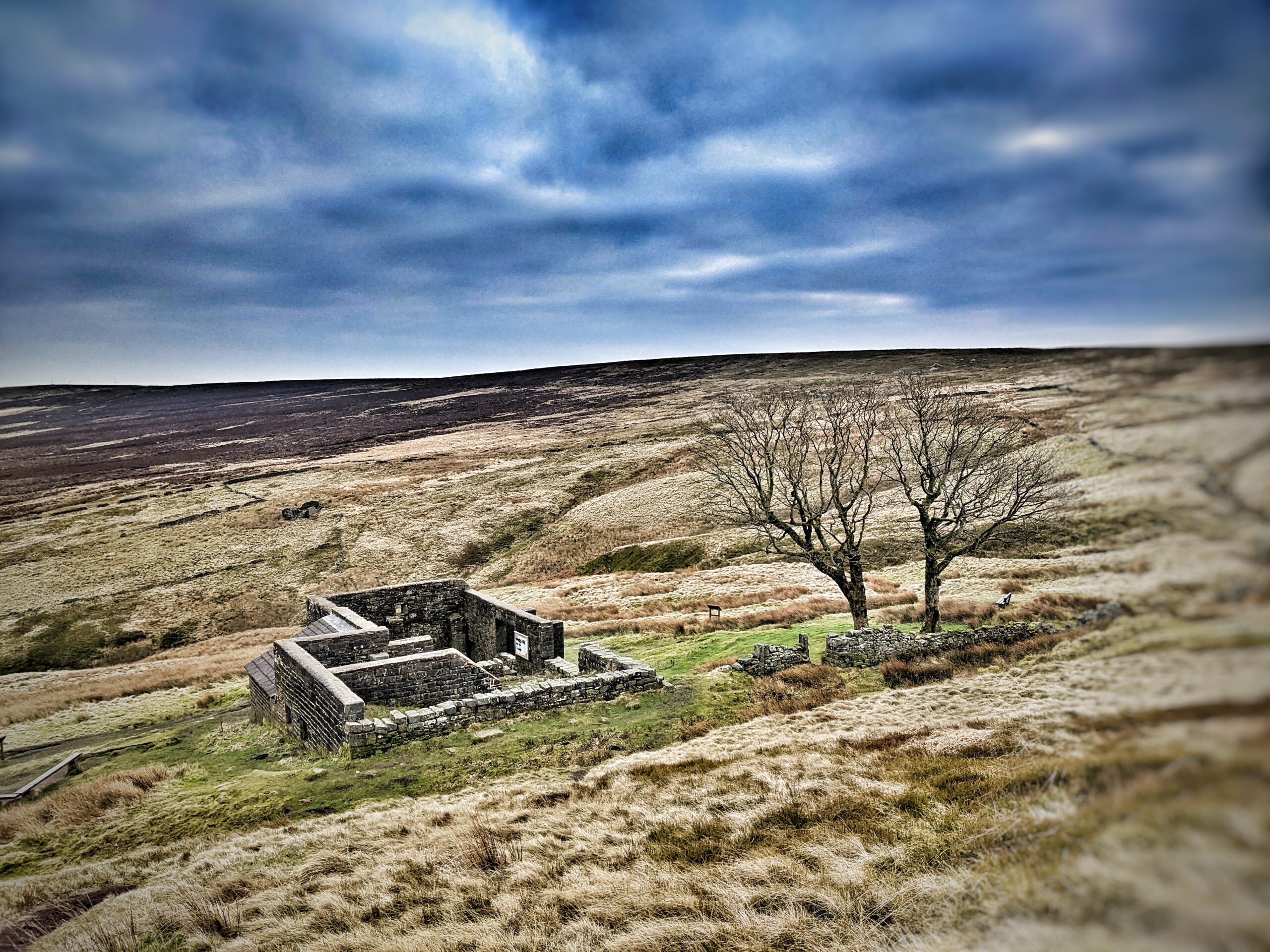
The house is roofless, labyrinthine, merciless. Initials carved over a fireplace, over the doors. It’s become a toilet for passing walkers who were expecting more in the way of facilities. Brought here by overweight uncles, they take photographs and return down the valley. Was it worth the walk? Will you write a poem about the view?
So you wait and you wait: the slow drag to the spring equinox, summer solstice, autumn equinox. Bones in the heather, a cuckoo stone, a hag stone. Things found beside the path which may or may not be contemporary. And it’s February so there are no birds, just threatening snow and the tapping of a tree branch against the window. It’s so cold and looks nothing like the sketch you made. The sheep still look the same, though: teeth yellow, half-savage.
Back at the Parsonage, the moon is reflected, over and over, in the leaded windowpanes. Was it a dream, after all? Black stone, black stone. Bacillus gently waving in the breeze, spots of blood on a handkerchief, a pair of slippers in a glass case, a dress you have no recollection of wearing, but which has been carefully curated and catalogued.